








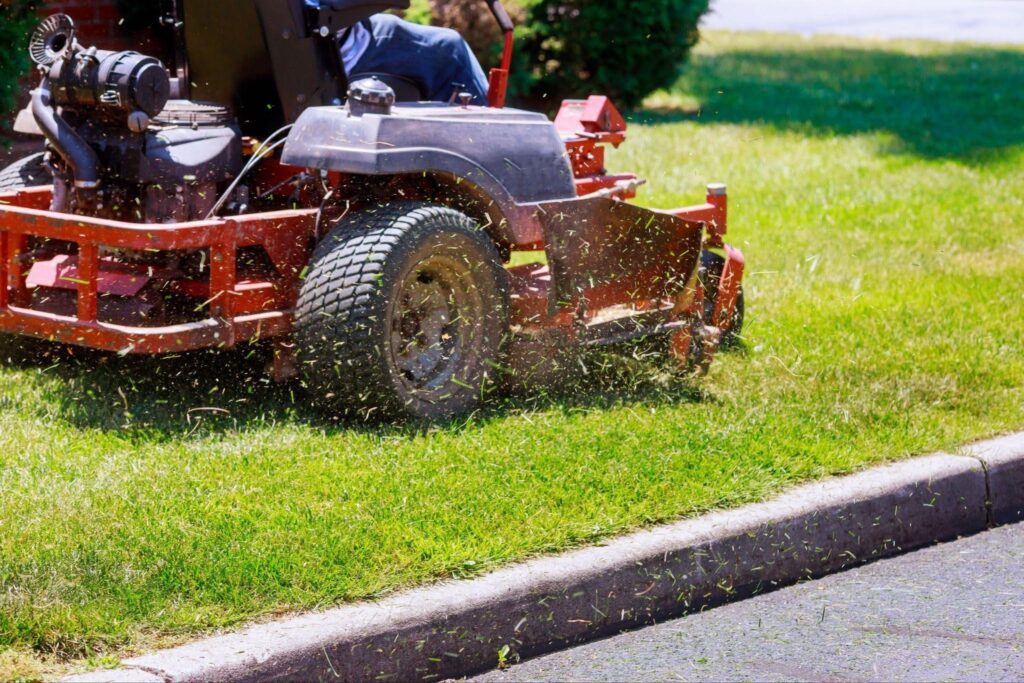
The best lawn care tips for summer focus on watering deeply, mowing at the right height, and protecting grass from heat stress. In Utah, strong summer lawn care also means accounting for dry air, wind, and sharp temperature swings. Consistent sod care helps lawns stay healthier, thicker, and better prepared for the hottest weeks of the season.
How to keep your lawn healthy through a Utah summer
Summer is hard on any lawn, but Utah yards face a few extra challenges. Dry air, windy afternoons, and long stretches of heat quickly stress turf. A few steady routines help your lawn keep better color, develop stronger roots, and recover faster from hot weather.
In this guide, we walk through homeowner-friendly lawn care tips that build on the basics of watering, mowing, staying ahead of weeds, and giving new turf the sod care it needs to handle summer conditions with less stress.
What summer lawn care looks like in Utah
Good summer lawn care isn’t about doing more simply because it’s hot. It’s about doing the right things at the right time. In Utah, lawns deal with dry air, wind, strong sun, and big swings between cool nights and hot afternoons. That dries out the soil fast and causes stress to show up sooner.
For most homeowners, the focus stays simple: water deeply, mow at the right height, stay ahead of weeds, and watch for signs of heat stress before they turn into bigger problems.
Top summer lawn care tips to focus on in 2026
1. Plan your watering schedule wisely
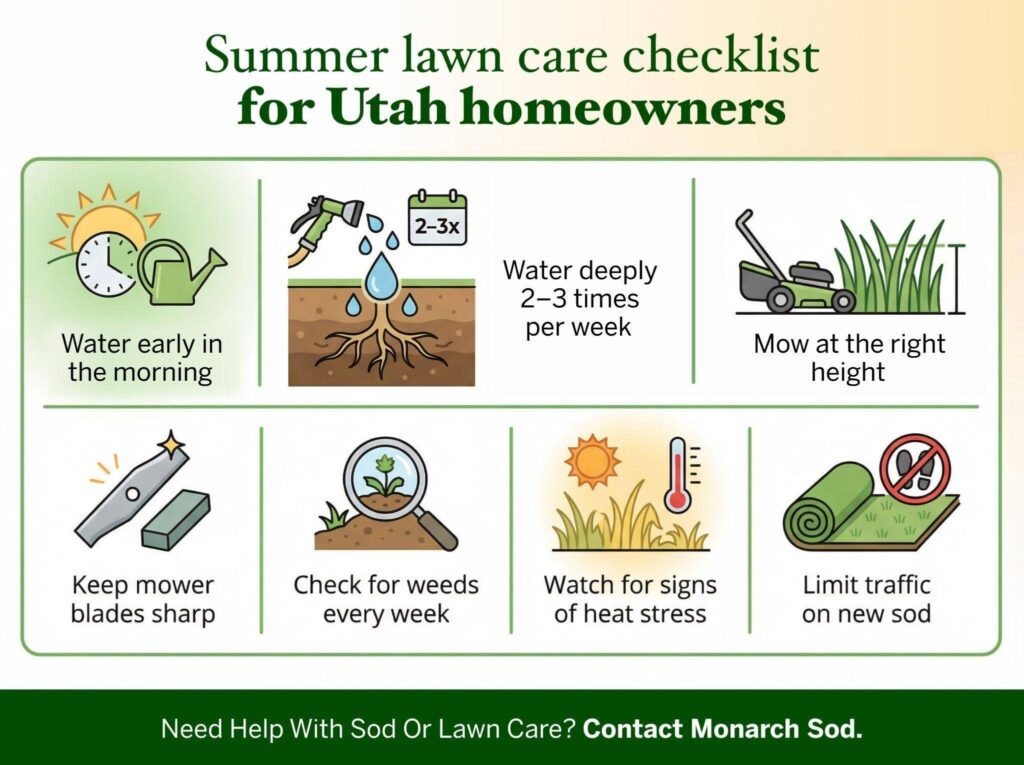
First, set your watering schedule up to support healthy lawn growth. Watering in the early morning usually gives moisture more time to soak into the soil before the hottest part of the day increases evaporation.
For many lawns, deep watering two to three times per week is a practical starting point, then adjust based on heat, soil, sun exposure, and sprinkler performance. If one area dries faster than another, don’t assume your whole lawn needs the same runtime. Check for runoff, dry corners, and overspray onto hard surfaces.
2. Know when to mow
Next, pay attention to how often you mow and how much grass you’re taking off each time. In the summer, cutting your lawn too short adds extra stress. That’s why one of the best lawn care tips is to mow consistently without scalping the grass.
Try to base your mowing schedule on how fast the lawn is growing. If it’s growing quickly, mow a little more often so you’re not cutting off too much at once. Keep your mower blades sharp, and leave the clippings when it makes sense. Slightly taller grass also helps shade the soil and hold moisture better during hot weather.
3. Stay on top of your weeds
One of the easiest things to overlook during summer lawn care is weed control. Weeds compete with your grass for water, sunlight, and nutrients, and that becomes a bigger issue in hot, dry weather. A quick check each week helps you catch small problems before they turn into a much bigger mess.
Pay close attention to lawn edges, thin spots, and areas around sprinkler heads where coverage may be uneven. Pull isolated weeds early, and spot-treat carefully when needed. Over time, a thicker, healthier lawn also helps crowd weeds out and keep your yard looking more even.
4. Watch for heat stress before it spreads
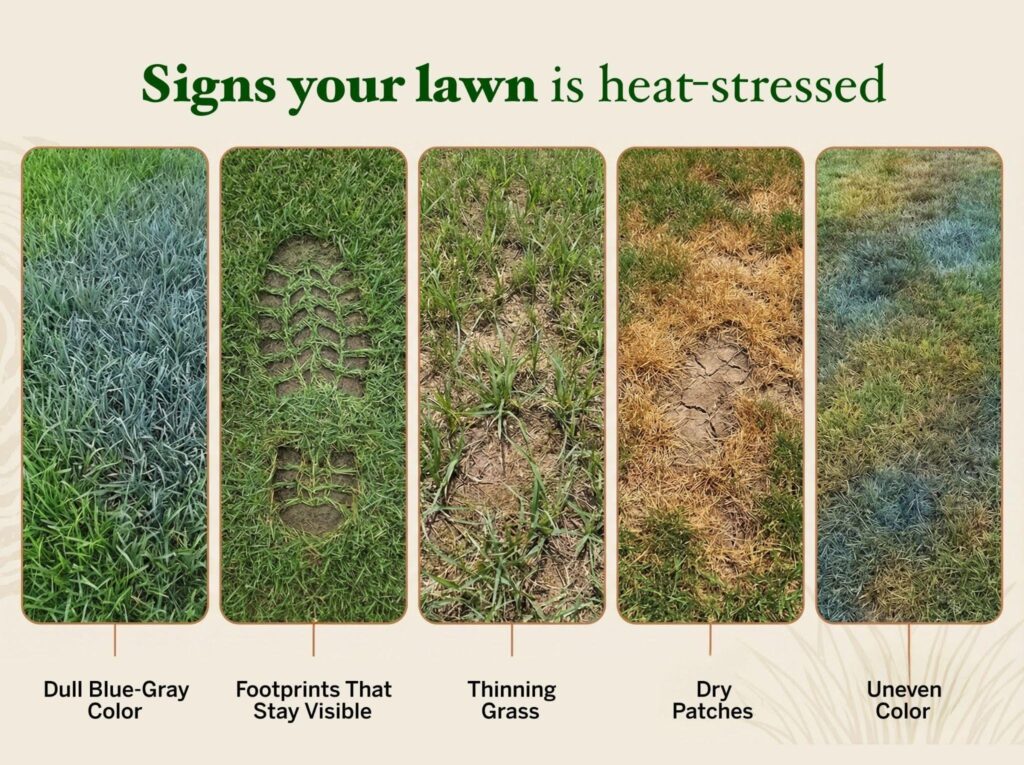
Heat stress usually shows up before most homeowners realize there’s a watering or coverage problem. Watch for a dull blue-gray color, footprints that stay visible, thinning grass, or dry patches that don’t bounce back overnight. Those are all signs your lawn needs attention sooner rather than later.
Try to walk your yard every few days during hotter stretches. It’s much easier to adjust a sprinkler or fix a dry area early than to deal with more extensive damage later. This matters even more with newer turf, where consistent sod care helps roots establish more evenly.
5. Adjust for new sod and heavy traffic
New sod usually needs more attention than an established lawn. Summer activities also wear out problem areas, such as those near patios, play areas, dog runs, and side yards. If you’ve got fresh sod, try to limit foot traffic while it’s taking root. Keep moisture consistent without overwatering, and watch for edges or seams that dry out faster than the middle.
Common summer lawn problems and simple fixes
Many summer lawn problems stem from a few common issues. One yard may have a dry spot because sprinkler coverage is uneven. Another may struggle because the new sod isn’t getting consistent care, and in other cases, mowing too short leads to thinning grass and more weeds.
The good news is that small adjustments make a big difference. When you fix coverage issues, follow a steady sod care routine, and avoid cutting the lawn too short, your yard has a much better chance of staying full and healthy through the summer.
Why summer lawn care matters
Following practical summer habits helps homeowners:
- Support deeper root development
- Improve lawn color and overall appearance
- Reduce heat and drought stress
- Limit weed competition
- Make irrigation more efficient
- Protect investment in new turf
- Improve long-term sod care results
- Set the lawn up for better recovery going into fall
Common mistakes to avoid
Avoid these common summer lawn mistakes:
- Watering during the hottest part of the day
- Letting sprinklers run without checking coverage
- Mowing too short in an attempt to mow less often
- Ignoring early signs of heat stress
- Waiting too long to deal with weeds
- Putting too much traffic on new or stressed turf
Lawn care tips backed by research
- Water early. Early morning watering helps more moisture reach the root zone before heat and wind increase evaporation.
- Water deeply and check coverage. Uneven sprinkler coverage leads to dry spots, runoff, and wasted water.
- Don’t mow too short. Cutting grass too low in summer increases heat and drought stress, making your lawn more vulnerable to weeds.
- Keep mowing height consistent. Slightly taller grass helps shade the soil, support stronger roots, and improve moisture retention.
- Small routine changes matter. Consistent watering, mowing, and monitoring usually do more for lawn performance than overcorrecting after stress shows up.
Lawn care tools and simple recommendations
- A programmable sprinkler timer
- Catch cups or a simple rain gauge to check irrigation output
- A mower with sharp blades
- A hose or sprinkler setup that lets you correct isolated dry spots
- A simple weekly lawn check routine for weeds, stress, and coverage issues
- Professional help when you need support with installation, delivery, or troubleshooting
FAQ
How often should I water my lawn during the summer in Utah?
Deep watering two to three times per week is a good starting point, but the right schedule depends on your soil, sun exposure, and sprinkler coverage. Early morning is usually the best time to water.
Should I mow my lawn shorter in summer?
No. Cutting grass too short adds heat stress and dries the soil out faster. It’s better to mow consistently and avoid taking off too much at once.
What is the most important part of sod care in summer?
Consistency. Steady watering, careful mowing, and regular check-ins help sod handle summer stress better. It’s also smart to watch for dry edges, heat stress, and heavy foot traffic.
How do I tell if my lawn is heat-stressed?
Look for dull color, lingering footprints, thinning grass, or dry patches that don’t recover overnight. Those are usually signs your lawn needs attention.
Do weeds really matter that much in summer?
Yes. Weeds compete with your grass for water and nutrients. A quick weekly check helps you catch them before they spread.
Keep your lawn summer-ready with Monarch Sod
Summer lawn success usually comes down to a few steady habits: water wisely, mow at the right height, stay ahead of weeds, and watch for early stress. In Utah, those basics go a long way. If you need help with installation, delivery, or practical guidance for your yard, contact Monarch Sod to request a quote or schedule service.